Diablo 4's Dark Citadel and the Future of Group-Only Content: A Solo Player's Lament
The echoes of demonic screams have barely faded in the jungles of Nahantu, but a different kind of roar is rising from the player base of Diablo 4. It's not the roar of a Prime Evil, but the collective sigh—and occasional frustrated grumble—of solo adventurers. At the heart of this latest Sanctuary controversy sits the Dark Citadel, the flagship endgame activity introduced in the Vessel of Hatred expansion. Game Director Brent Gibson, standing firm like a fortified barbarian, has made it clear: this co-op-only fortress is not an anomaly, but a blueprint. For the lone wolf Necromancers and solitary Rogues of the world, the message is stark: find friends, or find another dungeon.
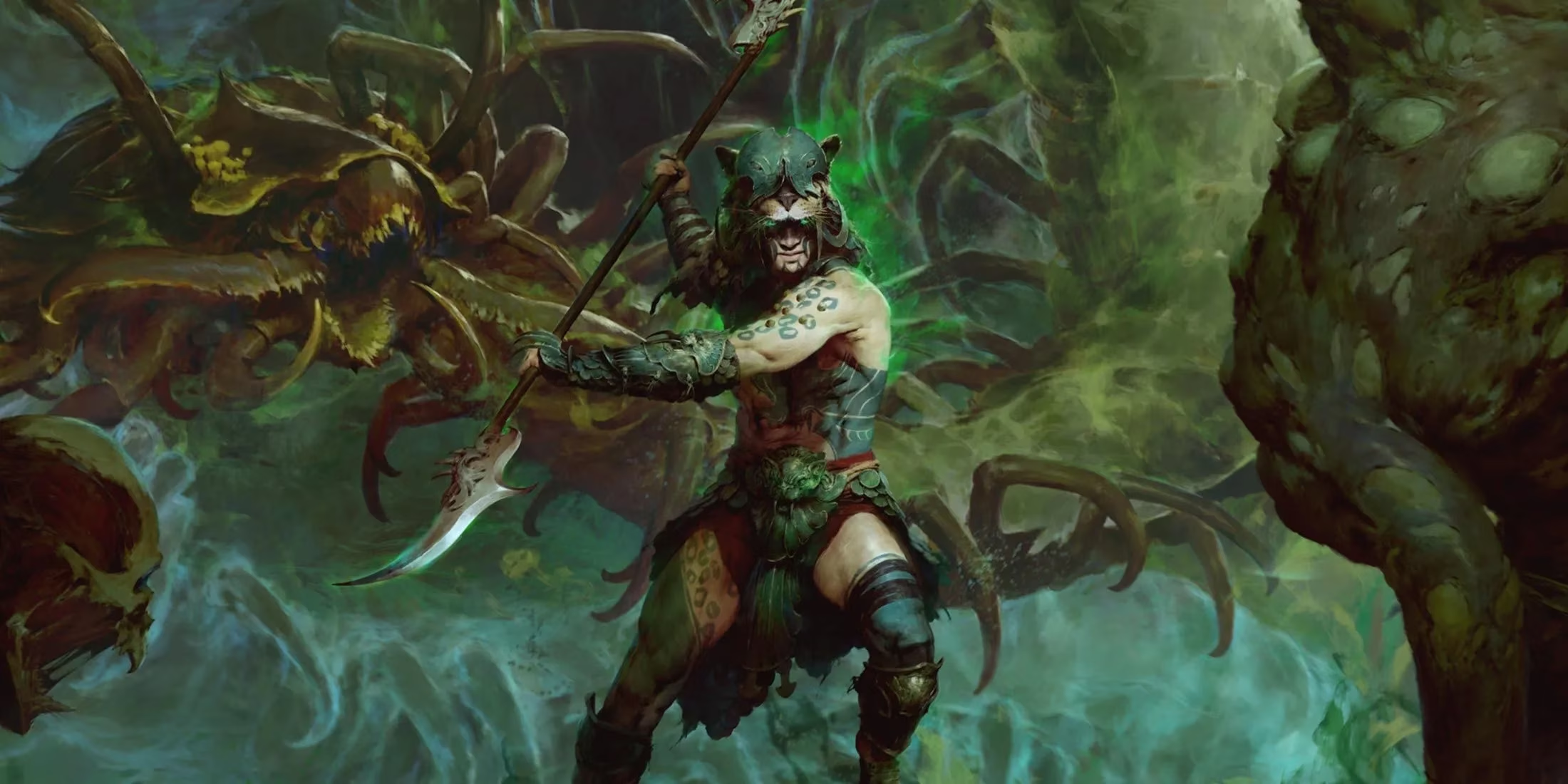
Gibson, in a recent interview, didn't just acknowledge the Dark Citadel's divisive nature; he embraced it with the fervor of a zealot praising the Light. He expressed satisfaction with its reception from those who have played it, a key caveat that hangs in the air like a cursed artifact. The feedback from groups who have stormed its hellish halls has been positive, painting a picture of intense, coordinated battles that solo play could never replicate. For Gibson and General Manager Rod Fergusson, this represents a successful experiment in diversifying the endgame 'playbook.' They envision a Sanctuary where players can choose their path: the frantic solo grind of The Pit, the chaotic waves of the Infernal Horde, the exploration of the Kurast Undercity, or the tactical, communication-heavy siege of the Dark Citadel. It's a buffet of damnation, but one dish requires a party of four to even lift the lid.
So, what's a solo player to do in the face of this unwavering stance? 😩 The advice, implicitly and explicitly, is to adapt. The game's social systems—clans, the party finder, global chat—are now more crucial than ever. For many, this is an unwelcome push into multiplayer dynamics they deliberately avoided. The Dark Citadel isn't just challenging; it's exclusive. It locks away story context, legendary loot, and a core piece of the expansion's narrative behind a social barrier. This has left a portion of the community feeling penalized for their preferred playstyle, arguing that accessibility options or a scaled-down solo version wouldn't diminish the group experience for those who seek it.
Yet, Blizzard's vision seems unshaken. Gibson's phrase, "sticking to my guns," reverberates with finality. The studio is betting that the long-term health of Diablo 4 relies on creating memorable shared experiences that fuel community stories and content. They are watching the Citadel closely, not for signs of whether to remove its group requirement, but for how to iterate on the concept in future updates. The implication is clear: more Dark Citadels are coming. Future expansions and seasons may very well introduce other activities designed explicitly for coordinated teams, further expanding this 'group-only' wing of the endgame arsenal.
| Activity | Primary Focus | Solo-Friendly? |
|---|---|---|
| The Pit | Timed dungeon crawling | ✅ Yes |
| Infernal Horde | Wave-based defense | ✅ Yes |
| Kurast Undercity | Exploration & Bounties | ✅ Yes |
| Dark Citadel | Coordinated boss raids | ❌ No (4-player co-op) |
All eyes now turn to the horizon, where Season 7 looms. Currently baking on the PTR, the new season is introducing a slew of quality-of-life changes that feel almost ironic in this context. One major update will finally stop forcing players to repeat Class Quests on every new character—a long-requested fix that respects a player's time. The rewards will be tied to reaching a specific level on your account, a welcome change for solo alt-makers and group players alike. It's a curious contrast: one hand gives a gracious gift to solo progression, while the other points firmly toward a group-gated fortress.
The ultimate question for Diablo 4 in 2026 is one of philosophy. Can a game successfully cater to both the solitary, self-reliant slayer and the dedicated, voice-chatting party? Blizzard's current trajectory suggests they believe so, but they're willing to make some players uncomfortable to get there. The Dark Citadel stands as a monument to that belief—a towering, impenetrable challenge that whispers (or perhaps shouts) that some of Sanctuary's greatest threats are meant to be faced together, or not at all. Whether this forges a stronger community or simply fractures it further remains one of the endgame's most compelling, and contentious, storylines. For now, the soloists wander the outskirts, listening to the distant cheers from within the Citadel walls, wondering if their path forward is to knock on the gate, or simply walk away.