Diablo 4: Vessel of Hatred's Messy Launch – A 2026 Retrospective
The memory of Diablo 4's first expansion launch still stings for many veteran Nephalem. Back in October 2024, the community’s excitement for Vessel of Hatred was at a fever pitch. Players had cleared their calendars, stocked up on energy drinks, and prepared to dive headfirst into the new jungle of Nahantu as the fresh Spiritborn class. But what happened next became a cautionary tale in the action RPG world. It was a disaster that delayed launch parties, triggered a steam review bomb, and left fans restless for hours. Yet, looking back from 2026, the way Blizzard handled that night ultimately revealed a surprising level of care for the long-term health of the game.
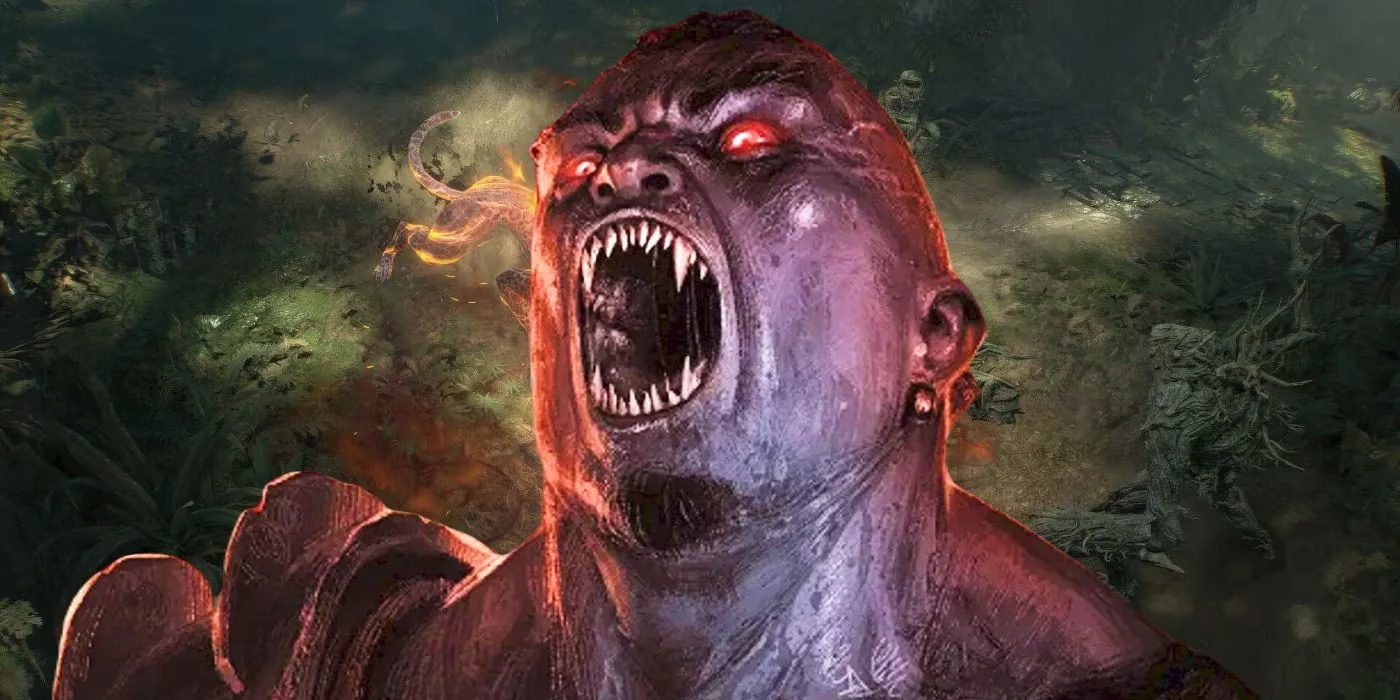
The chaos began just ninety minutes before the scheduled 7 PM Eastern Time launch. Adam Fletcher, Diablo’s Global Director of Community, took to social media to announce an unexpected delay. No one at Blizzard provided a detailed technical breakdown at the time, but the signs pointed to a critical last-minute quality assurance catch. Speculation from the community suggested that the pre-loaded patch was essentially corrupted or contained a game-breaking error. Instead of pushing the broken update live and risking account corruption or server meltdowns, the team made the difficult call to hold everything back.
Players who tried to log in at the original hour were met with locked servers and confusion. The situation quickly escalated. Blizzard required Battle.net users to download an additional, substantial update alongside the DLC itself. This meant that eager customers \u2013 many of whom had already pre-loaded the expansion \u2013 now had to wait through another massive download. The timeline was messy: Battle.net players finally started getting in just before midnight, while console players on PlayStation and Xbox joined shortly after. Still, some reports persisted of an inability to access the Spiritborn class even after installation, adding fuel to the fire.
Not surprisingly, the reaction on Steam was immediate and brutal. \ud83d\ude24 A wave of negative reviews flooded the store page, criticizing a \u201cbungled\u201d launch and unplayable servers. The review bombing wasn’t necessarily about the quality of the content itself, but about broken expectations. In a game like Diablo 4, time is quite literally power. Seasons reset progression every few months, and dedicated fans treat the first hours of a new expansion the way a sprinter treats a starting gun. They request time off work, they adjust sleep schedules, and they compete furiously for those early leaderboard spots. A five-hour setback wasn’t just an inconvenience; it shattered meticulously crafted plans. \u23f0
| Platform | Approximate Access Time After Original Launch |
|---|---|
| Battle.net (PC) | ~5 hours delay (accessible near midnight) |
| Other platforms | Just after midnight |
Despite the outrage, Blizzard’s response was measured. They didn’t rush out a dangerous patch to appease a frustrated Twitter mob. They absorbed the reputational hit, fixed the issue, and conducted additional QA checks. As one Reddit commenter observed, the sheer size of the extra patch suggested a fundamental error in the initial file set, which would have been catastrophic if released. This decision might have disappointed fans in the short term, but it prevented scenarios like character corruption or a complete service collapse.
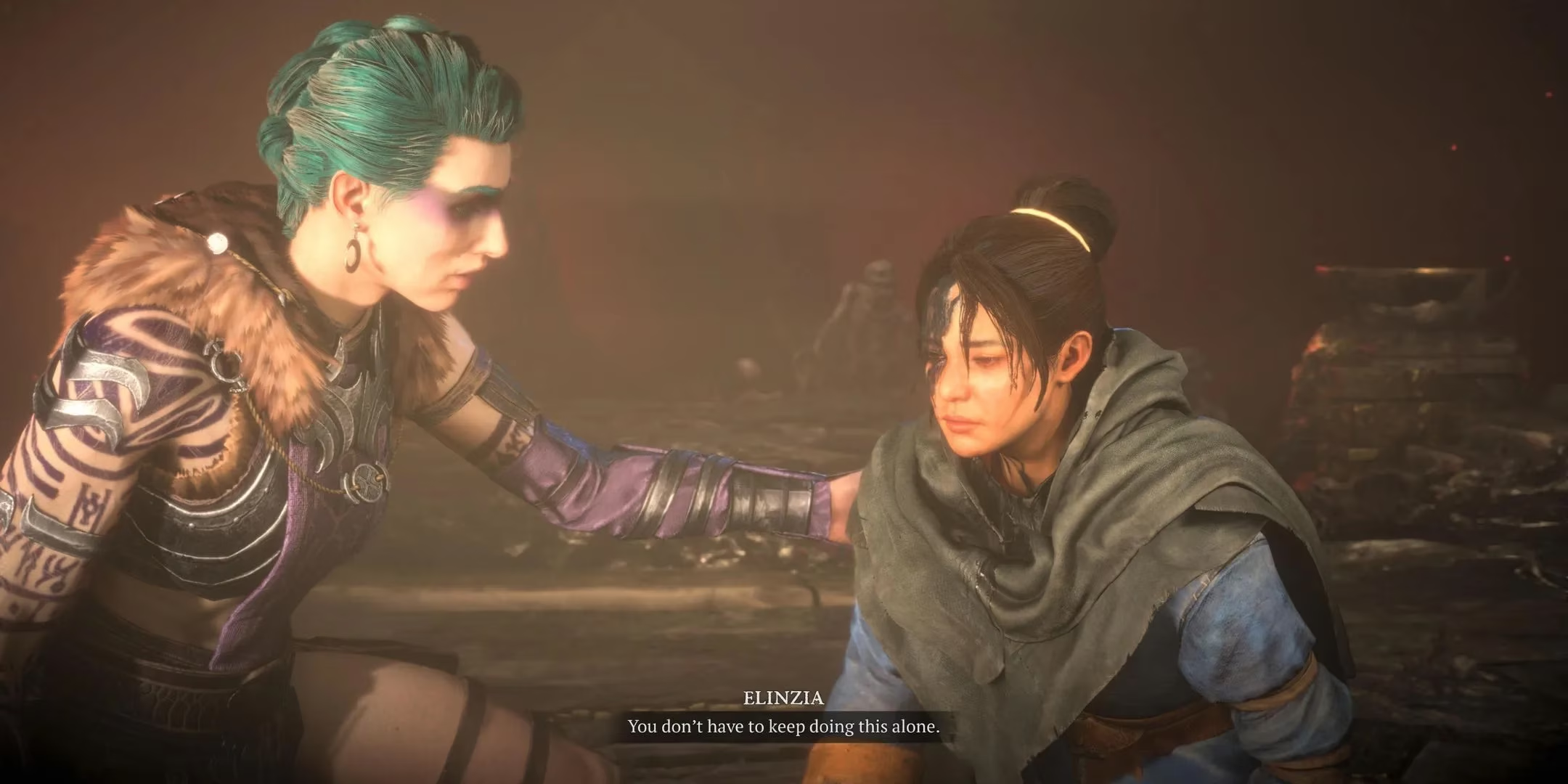
Why does this matter now, in 2026? That messy launch became a turning point for the live service cadence. The developers learned that transparency and a safety-first mindset, while painful, earn a quiet respect from the core audience over time. Since then, major patches and seasonal rollouts have been accompanied by extended maintenance announcements and even contingency windows. The Diablo 4 team now treats server stability with the reverence that Sanctuary veterans reserve for a well-rolled Grandfather sword. \ud83d\udee1\ufe0f
The launch of Vessel of Hatred was far from perfect. It was chaotic, poorly communicated at first, and legitimately upset a ton of players. But the fact that Blizzard chose to protect player data and overall game integrity \u2013 at the cost of a smooth launch and favorable reviews \u2013 suggested that the franchise was in steady hands. By 2026, the Spiritborn class has carved out its own niche in the meta, and the jungles of Nahantu feel like they’ve always been part of Sanctuary. The delay is now just a campfire story, a reminder that even the dark lords of Hell must occasionally bow to a download bar.

Data referenced from HowLongToBeat helps contextualize why a multi-hour delay like Vessel of Hatred’s launch night hit so hard: when players plan their first session down to the hour for a new class and region, even a short disruption can throw off pacing, progression goals, and group schedules. Looking at typical campaign and expansion-length expectations also explains the intensity of “day one” competition—those early hours often determine who reaches endgame systems first, shaping initial meta chatter and social momentum.