Exploring Nahantu in Diablo 4 Vessel of Hatred: A Visual and Auditory Renaissance in 2026
Stepping into the Nahantu region for the first time in 2026 feels like rediscovering Diablo 4 all over again. The Vessel of Hatred expansion released in late 2024, but even now, two years later, its environments remain a standout moment that continues to draw me back. After countless hours roaming the base game's Sanctuary — a world deliberately steeped in oppressive gloom — the lush, vibrant jungles of Nahantu are a shock to the system in the best possible way. The moment I cross through the portal into this revamped classic zone from Diablo 2, the shift is immediate and visceral. Gone are the muted browns and perpetual twilight; instead, I'm greeted by a tapestry of rich emerald canopies, golden sunlight filtering through leaves, and an almost intoxicating sense of life.
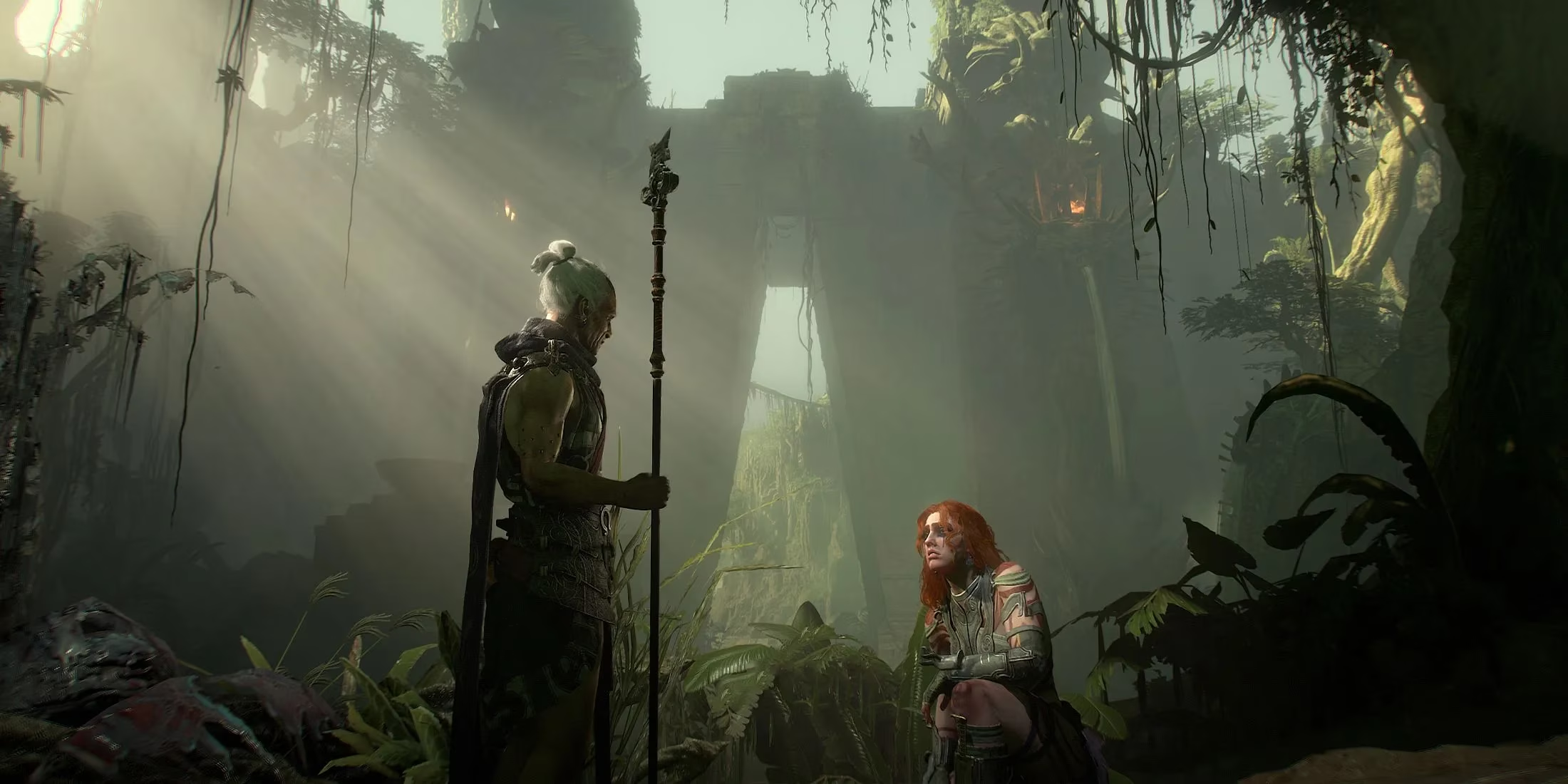
I was initially skeptical that any part of Sanctuary could look so... alive. The series has always thrived on darkness, and Diablo 3 was famously criticized for being a touch too colorful, losing that morbid, gothic edge. Diablo 4 course-corrected hard, plunging every forest, swamp, and town into a heavy, palpable shroud of despair. While effective, that uniformity eventually began to wear on my senses. Exploration felt monotonous because every region — from the snowy Fractured Peaks to the arid Dry Steppes — shared the same emotional tone of dread. Nahantu smashes that mold. It doesn't abandon the grim atmosphere entirely, but rather creates a genuine contrast. The feeling is akin to stepping out of a dark cellar and into a sun-drenched rainforest after a storm.
What makes Nahantu so replayable in 2026 isn't just its visual splendor; it's the delicate interplay between light and corruption. Many areas remain gorgeously untouched, saturated with deep greens and warm ochre highlights that make riding my massive feline mount — a perfect match for the Spiritborn class — a sheer joy. The claustrophobia of the base game lifts, replaced by a breathless sense of wonder. Yet as I venture deeper, Mephisto’s black tendrils begin to appear, twisting lush vegetation into putrid, rotting filth. This juxtaposition is far more impactful than any uniform dread could ever be. Healthy, thriving spaces make the corrupted zones feel truly tragic rather than just another ugly hellscape. The environment tells a story without a single line of dialogue, and I find myself slowing down to admire the details rather than rushing to the next loot drop.
A huge part of this immersive shift comes from the auditory experience. Even in 2026, I still listen closely to the new compositions crafted specifically for Vessel of Hatred. The base game’s soundtrack, while masterfully produced, is overwhelmingly somber — all mournful strings and low drones that reinforce the heavy atmosphere. In Nahantu, the music swells with something I hadn’t realized I missed: a sense of heroic adventure. During combat and pivotal quest moments, the themes become stirring and upbeat, propelling me forward with a rhythmic intensity that makes every Spiritborn slash feel cinematic. It’s not cheery by any means; it’s more like listening to a determined rebellion against the darkness. This change in musical tone was exactly what Diablo 4 needed to stave off stagnation, and it remains one of the expansion’s most intelligent design choices.
Looking back from my current vantage point in 2026, I can see how Nahantu served as a turning point for the game. The developers seem to have taken the feedback to heart, as subsequent expansions have continued to weave environmental diversity into Sanctuary’s fabric. We’ve seen more areas that dare to introduce splashes of color and varied lighting without betraying the franchise’s identity. But Nahantu remains the blueprint. It taught me that contrast is the secret weapon of psychological horror — you can only truly appreciate the dark after you’ve witnessed the light. Every time I revisit the sweltering jungles, whether to hunt down a Whispers cache or simply to admire the view from a cliffside, I’m reminded of why I still log in after all these years. The Vessel of Hatred expansion didn’t just add a new class or storyline; it revitalized the soul of the world, one vibrant pixel at a time.
For those who love to dive into expansions like Nahantu but want to keep an eye on their gaming budgets, finding the best deals on games and add-ons is crucial. Whether you're revisiting older expansions or exploring new ones, it's always rewarding to discover discounts that make each purchase even sweeter.
If you're someone who enjoys tracking the latest price drops, using a reliable steam sale tracker can be a game-changer. It’s an excellent resource for staying updated on discounts for titles like Diablo 4 and its expansions, ensuring you never miss an opportunity to expand your collection without breaking the bank.