Mephisto: The Enduring Threat of Hatred in the Diablo Universe
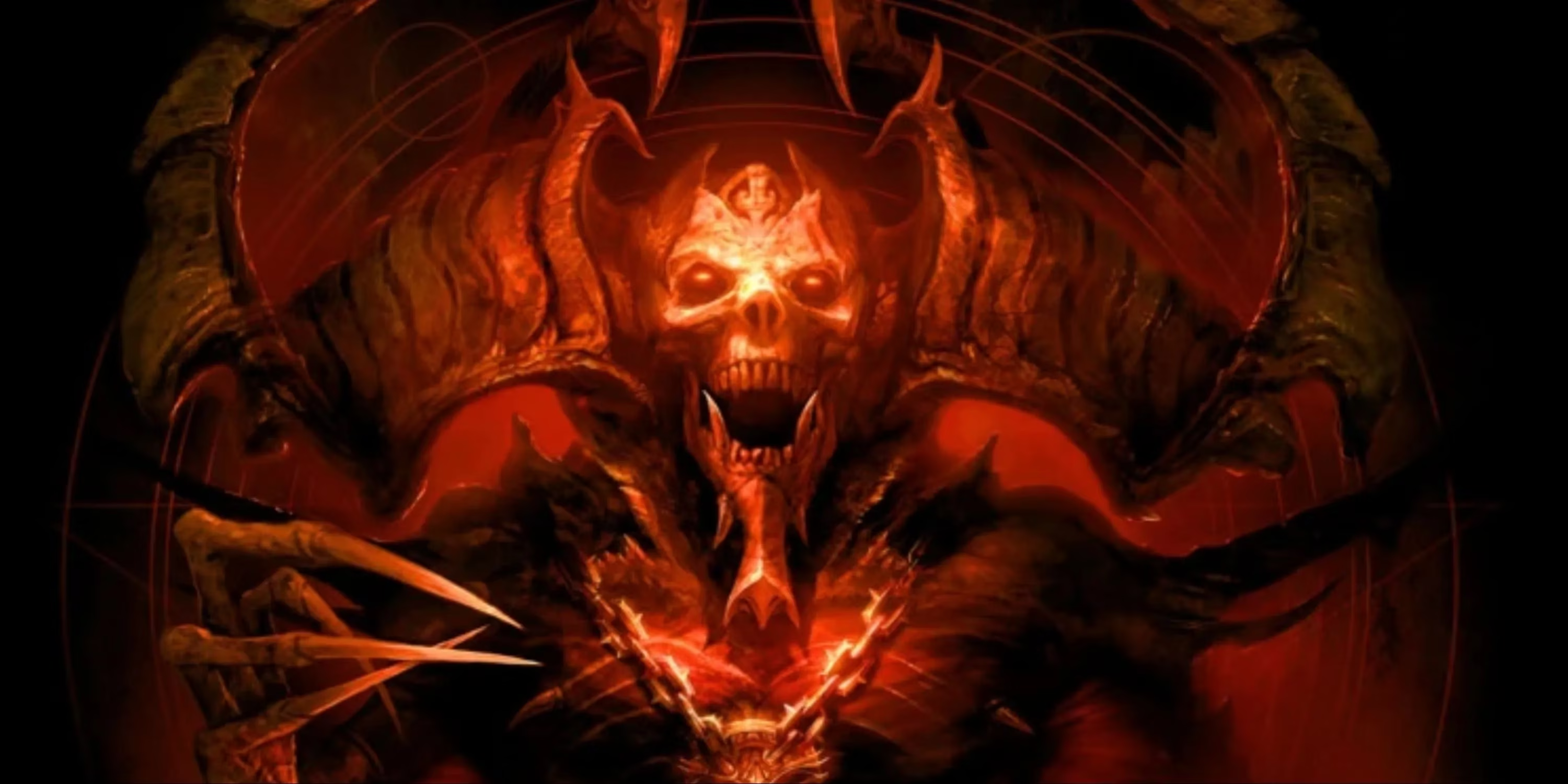
The world of Sanctuary has long served as the battleground for an eternal conflict between the High Heavens and the Burning Hells. At the heart of this infernal struggle stands a figure whose very essence corrupts the bonds between mortals and angels alike. Mephisto, the Lord of Hatred, is not merely a demon to be slain — he is a primordial force woven into the fabric of humanity’s darkest impulses. With the legacy of the Vessel of Hatred expansion continuing to ripple through Diablo 4 even in 2026, understanding this archvillain has never been more critical for players seeking to unravel the plotlines shaping the franchise.
Origins: The Birth of Pure Evil
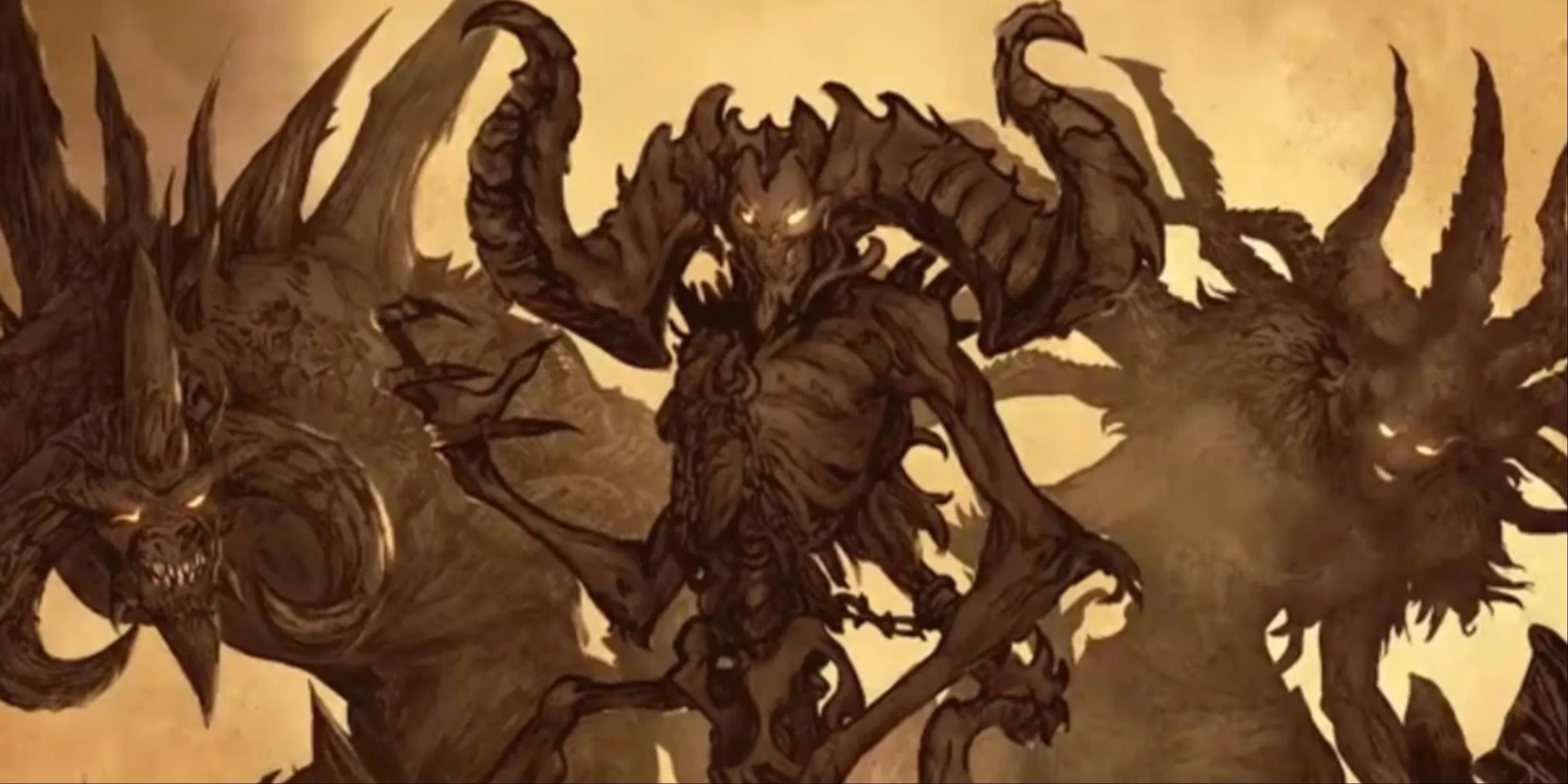
The story of Mephisto begins not with an individual, but with the death of a cosmic entity. According to ancient lore, Tathamet — the second being in existence and the embodiment of all darkness — fell in a titanic battle against Anu, the source of light. From Tathamet’s colossal corpse, the Burning Hells were born, and from his seven severed heads, the greatest demons of creation arose. The three primary heads gave form to the Prime Evils: Mephisto, his brother Baal, and Diablo. The four secondary heads produced the Lesser Evils — Andariel, Azmodan, Belial, and Duriel.
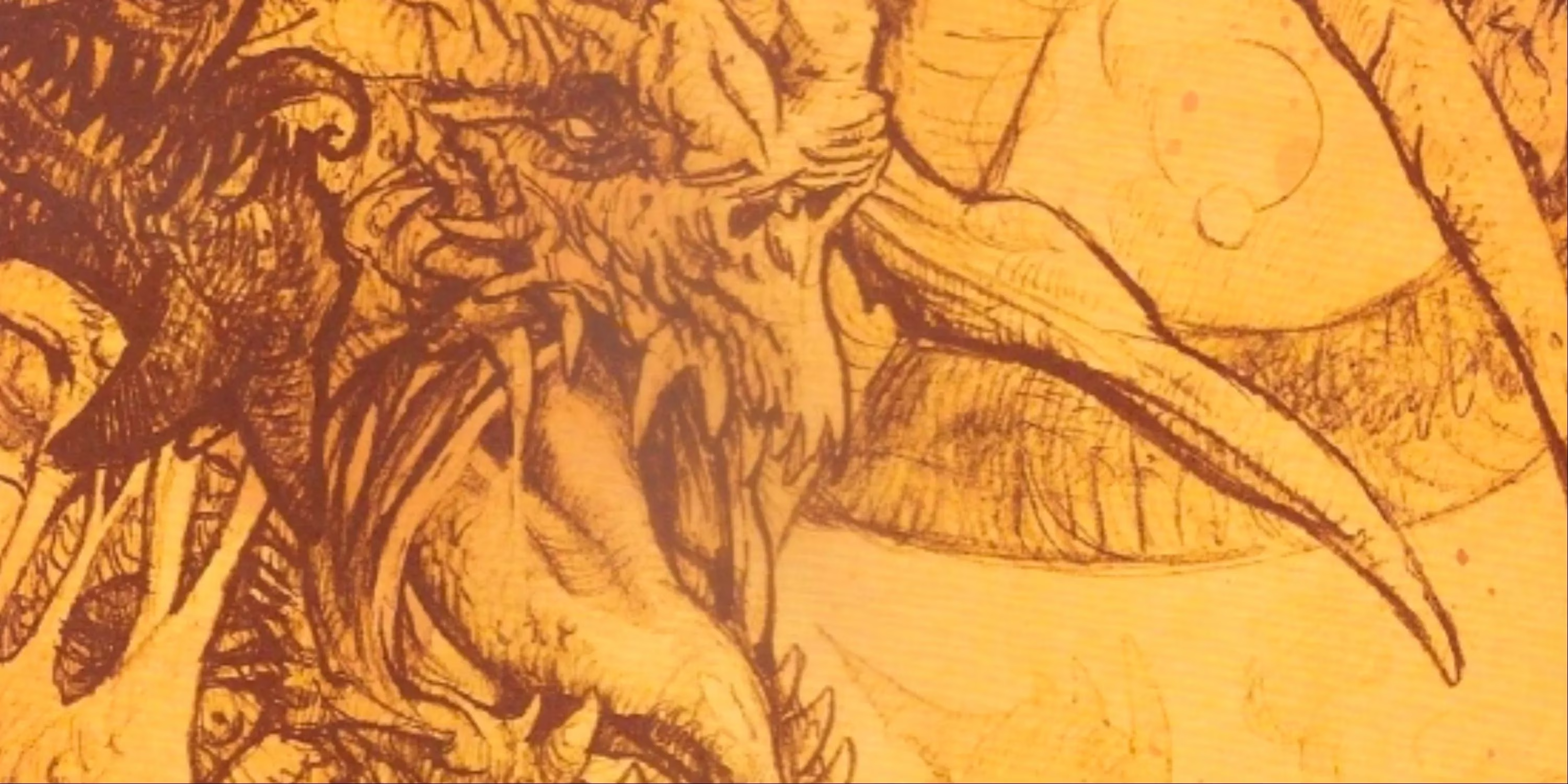
As the eldest of the Prime Evils, Mephisto inherited the purest concentration of Tathamet’s malice. Scholars across Sanctuary have long noted that while Diablo inspires terror and Baal seeks destruction, Mephisto operates on a far more insidious level — he turns love into resentment, loyalty into suspicion, and peace into chaos without ever needing to draw a claw.
What Are the Prime Evils?
The Prime Evils are the supreme overlords of the demonic legions, each one embodying a fundamental aspect of suffering. They exist in a state of perpetual war against the Heavenly Host, yet their true mastery lies in corrupting humanity. A Prime Evil cannot truly be annihilated; vanquishing one merely scatters its essence through the void until it reforms. The only method to contain them — sealing their spirits inside Soulstones — has historically proven tragically temporary.
Mephisto, in particular, thrives under such limitations. When confined within a Soulstone, he has repeatedly demonstrated an unmatched capacity to manipulate minds from within his crystalline prison, whispering poison into the thoughts of even the most devout guardians.
The Lord of Hatred's Master Plan
Recognized as the most diabolically intelligent of the three Prime Evils, Mephisto rarely engages in direct combat if it can be avoided. His domain — Hatred — gives him power every time a human or angel gives in to wrath. Every political schism, every broken family, every betrayed trust across Sanctuary unknowingly feeds his strength. Where Diablo seeks to dominate through fear, Mephisto prefers to sever connections entirely, leaving his enemies isolated and vulnerable.
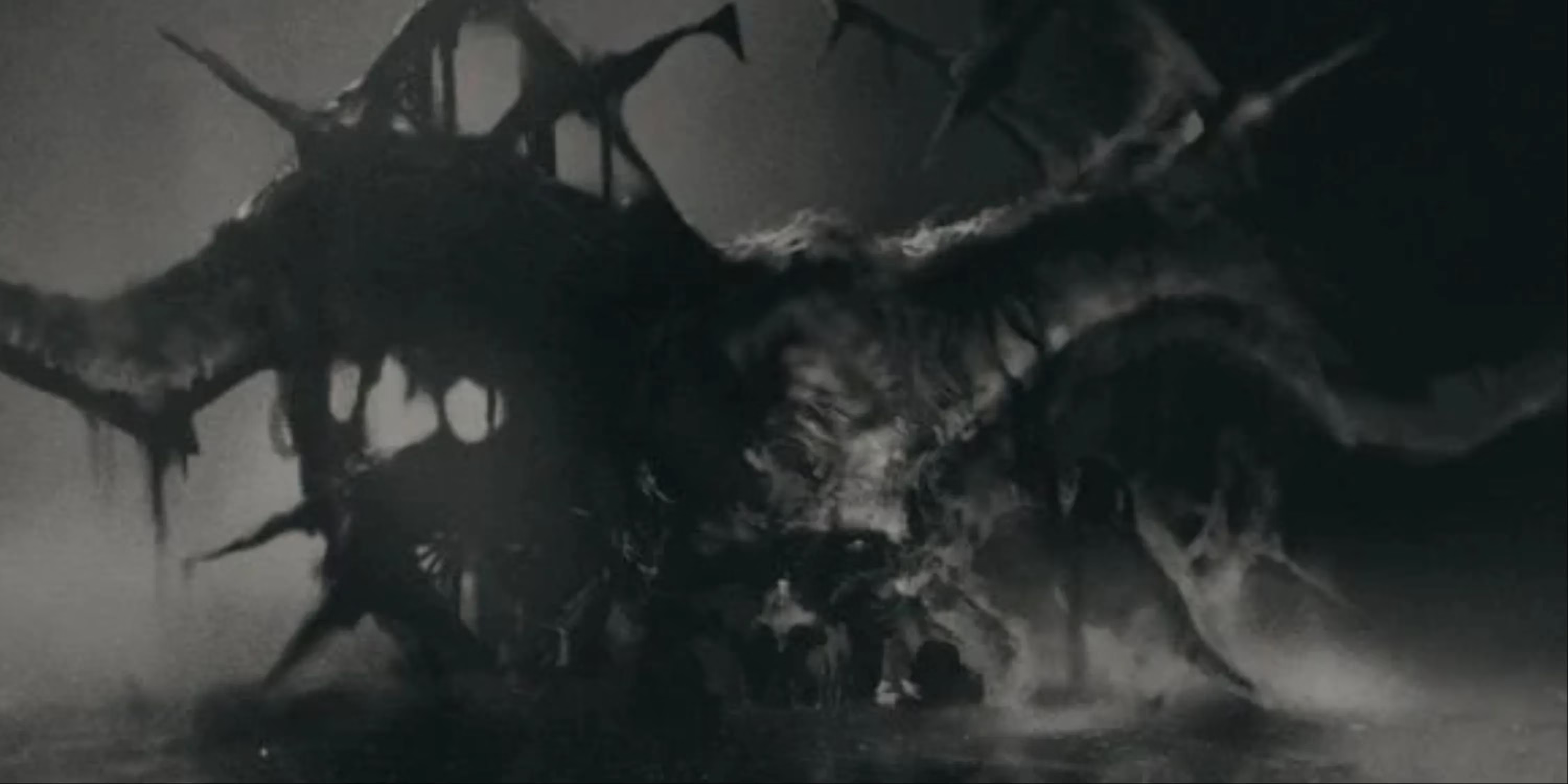
His influence stretches back to the very creation of humanity. In a mythological twist that few mortals realize, Mephisto is technically the grandfather of the entire human race. His daughter Lilith, in her forbidden union with the angel Inarius, gave birth to the first nephalem — the ancestors of all human beings. Furthermore, it was Mephisto himself who, disguised as the benevolent spirit Mefis, promulgated a philosophy of love that secretly sowed the seeds of future hatred. This long-term cunning culminated in a pact that bound both angels and demons to leave Sanctuary untouched, a truce Mephisto engineered because he believed that, left alone, humanity’s darker nature would inevitably consume it. His confidence so infuriated the Lesser Evils that they rebelled, setting in motion the Dark Exile — the event that cast the Prime Evils into the mortal realm and set the stage for the first Diablo game.
A Chronicle of In-Game Appearances
Mephisto’s footprint across the series is a study in progressive reveal and enduring menace. Understanding his appearances explains why the Lord of Hatred is now more dangerous than ever before.
Diablo (1996) — The original game, set in the town of Tristram, did not feature Mephisto. The narrative remained tightly focused on the immediate horror beneath the cathedral, with no room yet for the grander infernal hierarchy.
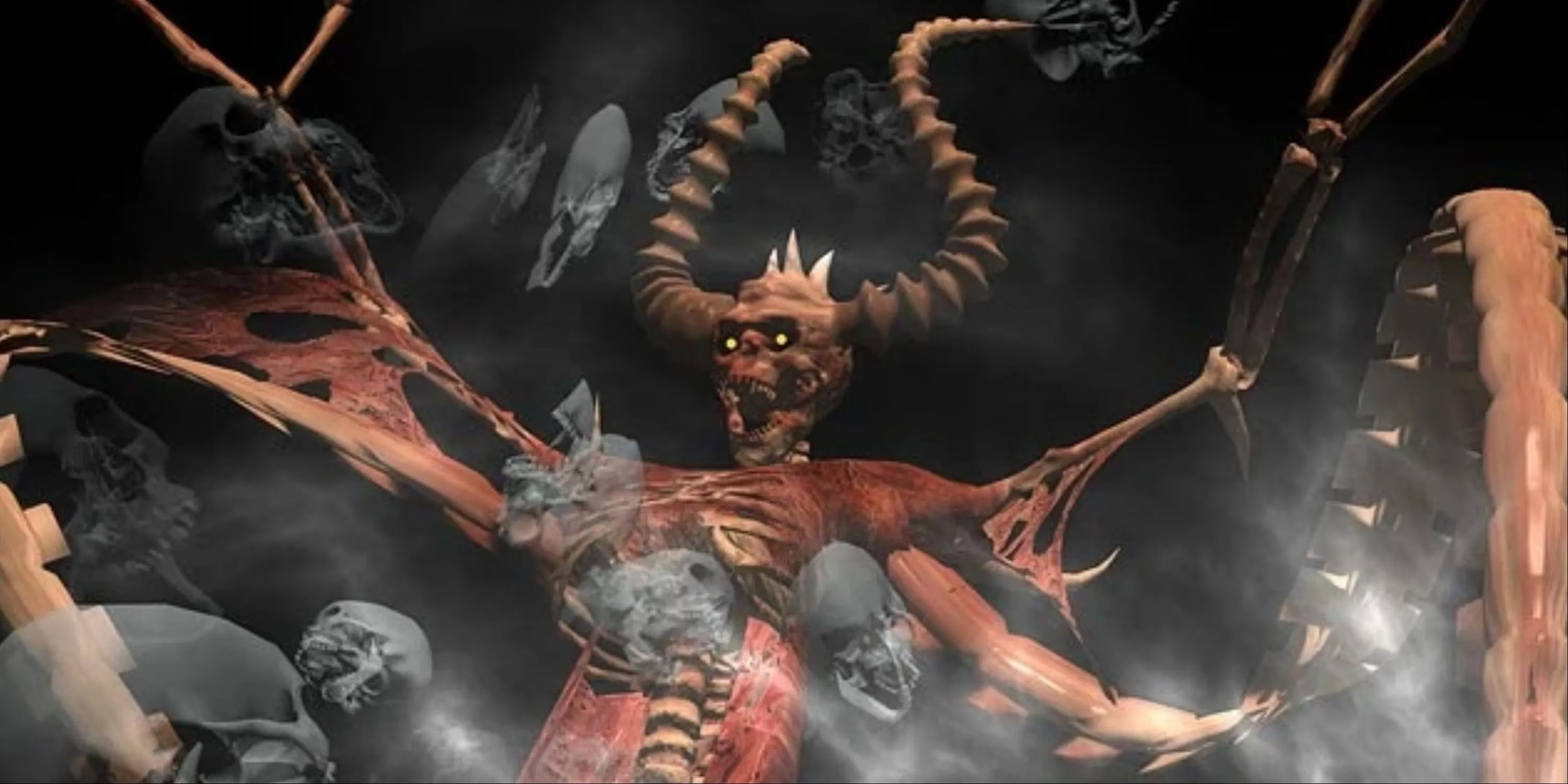
Diablo 2 (2000) — Act 3 of this landmark title placed Mephisto at center stage. Imprisoned inside a Soulstone and entrusted to the Zakarum priesthood in Kurast, he spent centuries corrupting his jailers. By the time Baal and Diablo sought to free him, Mephisto had already gained full control over the high priest. The player character arrived just in time to battle the demon lord in one of the most iconic boss fights in gaming history, eventually resealing him — temporarily — within his Soulstone, which was later destroyed at the Hellforge in a futile attempt to banish him forever.
Diablo 3 (2012) & Reaper of Souls (2014) — Mephisto’s essence was captured inside the Black Soulstone by the witch Adria, combined with the other Evils to create the singular Prime Evil Diablo. Following the defeat of Malthael, the Angel of Death, the Soulstone shattered and the merged spirits separated. Mephisto returned to his Realms of Hatred, but a fragment of him remained on Sanctuary — an injured wolf that would later prove pivotal.
Diablo 4 (2023) & Vessel of Hatred (2024) — Lilith may have been the face of Diablo 4’s conflict, but Mephisto was the true architect. Throughout the campaign, he manipulated heroes, villains, and even his own daughter, stoking hatred at every turn. In the end, Neyrelle trapped him in a Soulstone and fled north, intending to find a way to destroy him once and for all. However, as the Vessel of Hatred storyline makes devastatingly clear, no other Evil is more adept at exerting influence beyond the stone’s boundaries. By 2026, as new seasonal content continues to explore the psychological torment Mephisto inflicts on his carrier, players are left to wonder whether the elusive cure exists, or if the Lord of Hatred has already achieved exactly what he wanted.
Mephisto's Legacy Beyond the Main Games
Outside the core series, Mephisto’s lore has been expanded through comics, novels, and the Book of Lorath, painting a richer picture of his schemes. He is mentioned in the mobile game Diablo Immortal, but his most notable spin-off appearance is arguably as a playable character in Heroes of the Storm. That crossover allowed a new generation of players to experience his hatred firsthand, complete with the deadly abilities that made his Diablo 2 boss fight so memorable.
Why He Remains the Ultimate Threat in 2026
The current era of Diablo 4 has made one fact abundantly clear: physical might alone cannot defeat Mephisto. He weaponizes human emotion, thrives on the very strategies used against him, and operates on a timescale that spans millennia. As Neyrelle struggles northward, haunted by whispers and visions, the Lord of Hatred continues his favorite game — a slow, psychological dismantling that turns hope into despair. Whether the next expansion or the next patch finally reveals his full return, the security of Sanctuary has never felt so fragile. The only certainty is that, until hatred itself is erased from the hearts of mortals and angels, Mephisto will never truly be gone.