Sanctuary Reborn: The Lush Legacy of Diablo 4: Vessel of Hatred
The whispers of the jungle carried a new tale for the wanderers of Sanctuary. With the dawn of Diablo 4: Vessel of Hatred in late 2024, the world expanded, breathing with both verdant life and profound darkness. This expansion, a direct continuation of the main campaign's cliffhanger, wove a rich tapestry of narrative and systemic evolution, offering both a sprawling new chapter for those who sought it and foundational improvements that reshaped the journey for all. It was a gift to the faithful, a lush and perilous new frontier where the legacy of Diablo 2 met the modern ambitions of its successor.
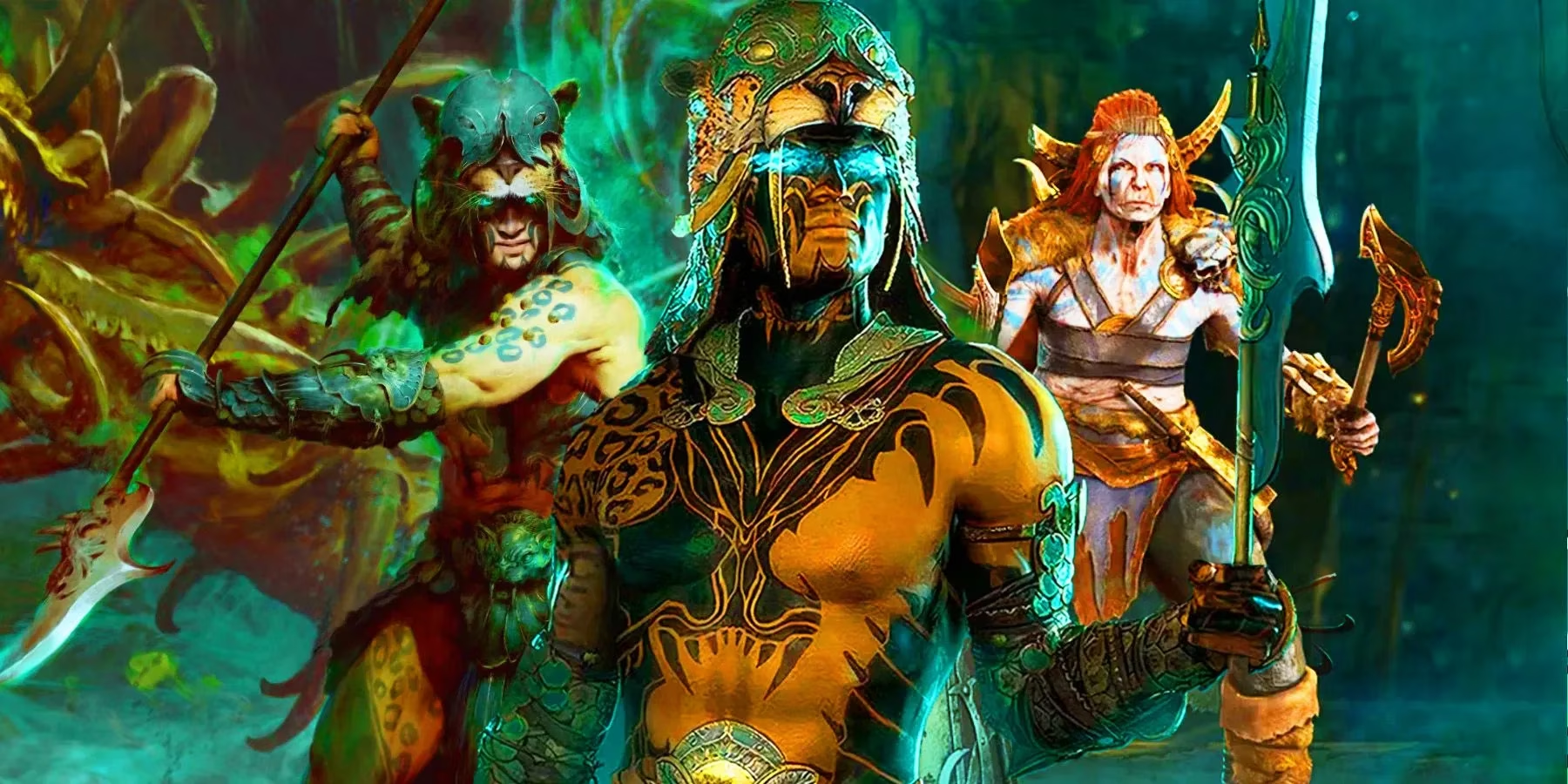
For many, the heart of the expansion beat within the dense, humid air of Nahantu. This was not merely new terrain; it was a homecoming for lore. Longtime devotees remembered its untamed essence from journeys past in Diablo 2, though it bore no name then. To the outside world, it was Torajan, a land south of Kehjistan shrouded in mystery and possessing a culture distinct from the rest of the continent. Despite the creeping influence of Mephisto's hatred that sought to corrupt its soul, Nahantu remained a place of breathtaking, if dangerous, beauty—a canvas of emerald canopies and ancient ruins where the story of Neyrelle and the soulstone would reach its fever pitch. Here, players embarked on an emotional race against the Lord of Hatred himself, a quest to save the world from a fate woven from vengeance and primordial evil.
Amidst this jungle, a new soul found its voice: the Spiritborn. This versatile class, introduced with Vessel of Hatred, became a conduit for the wild energies of Sanctuary. By communing with four unique Spirit Guardians, players could tailor their combat dance in thrilling new ways. Each spirit offered a suite of abilities, allowing for deep customization and a fresh perspective on the eternal conflict. It was a vibrant addition designed to mix up the established order, though by 2026, the echoes of community feedback and subsequent developer tuning had further refined its place within Sanctuary's pantheon of heroes.
Yet, the expansion's gifts were not confined to its purchased borders. Blizzard showered the entire Diablo 4 community with quality-of-life blessings. The long-awaited Party Finder system finally materialized, a tool for forging temporary alliances. Whether seeking comrades for the depths of a dungeon, the chaos of the open world, or the grueling trials of The Pit, wanderers could now find their kin with purpose. The system allowed for nuanced searches, filtered by activity, playstyle, and social preference—carving out spaces for farmers, carry requests, and everything in between.
Even the simple act of journeying across Sanctuary became smoother. A subtle but profound change allowed players to mark a specific Teleport Circle as a favorite. With this small ritual, the uncertainty of the Town Portal vanished. No longer would a weary adventurer be deposited at the nearest major city by default; instead, they could emerge precisely at their chosen sanctuary, be it the enigmatic Tree of Whispers or a remote waypoint nestled in the wilds. It was a small liberty that granted a profound sense of mastery over one's path.
The very tools of power evolved. Runewords, a beloved relic from Diablo 2, made a triumphant and refined return. These were not mere echoes of the past but intricate new instruments of war. By socketing a Rune of Ritual and a Rune of Invocation into an item with two open sockets, players could craft powerful Runewords. These combinations granted formidable buffs, but they demanded specific actions—a set amount of Offering—to trigger their potential. They became the cornerstone of sophisticated builds, rewarding strategic foresight and deepening the endgame's mechanical soul.
For those who embraced the expansion, the challenges grew deeper and more rewarding. The Kurast Undercity offered a pulse-pounding race against a ticking clock. Within the ruins beneath Kurast, every second was a precious commodity. Defeating bosses and reaching milestones could steal moments back from the relentless countdown, with the final loot reflecting one's speed and skill across three frantic floors. Entry required Tributes, and the choice of Bargains at the braziers allowed for a tantalizing gamble, customizing the potential rewards in pursuit of legendary treasures.
The ultimate test of cooperation arrived with The Dark Citadel, a new multiplayer raid that demanded coordination and courage. While a duo of exceptionally skilled warriors could conquer it, it was designed as a crucible for four. To even gain entry, one first had to prove their mettle by completing the Pit of the Artificer on the daunting tier 20, a feat only possible after reaching the new universal level cap of 60. Within the Citadel's three wings, hordes of enemies and formidable bosses stood guard, culminating in a desperate struggle to thwart the Khazra's attempt to summon a being of immense power. The rewards here were among Sanctuary's most potent, scaling gloriously with the Torment Level braved by the party.
Companionship, too, took a new form. Drawing inspiration from Diablo 3's followers, four Pale Hand Mercenaries became available to fight alongside the player. These were not mere hired swords but characters with their own brief stories, integrated into the expansion's narrative and finding a home in the Den. By questing together, players could build reputation with their chosen ally, unlocking new skills for them at early levels and earning unique rewards and achievements as their bond deepened. They were silent partners in the crusade against hatred.
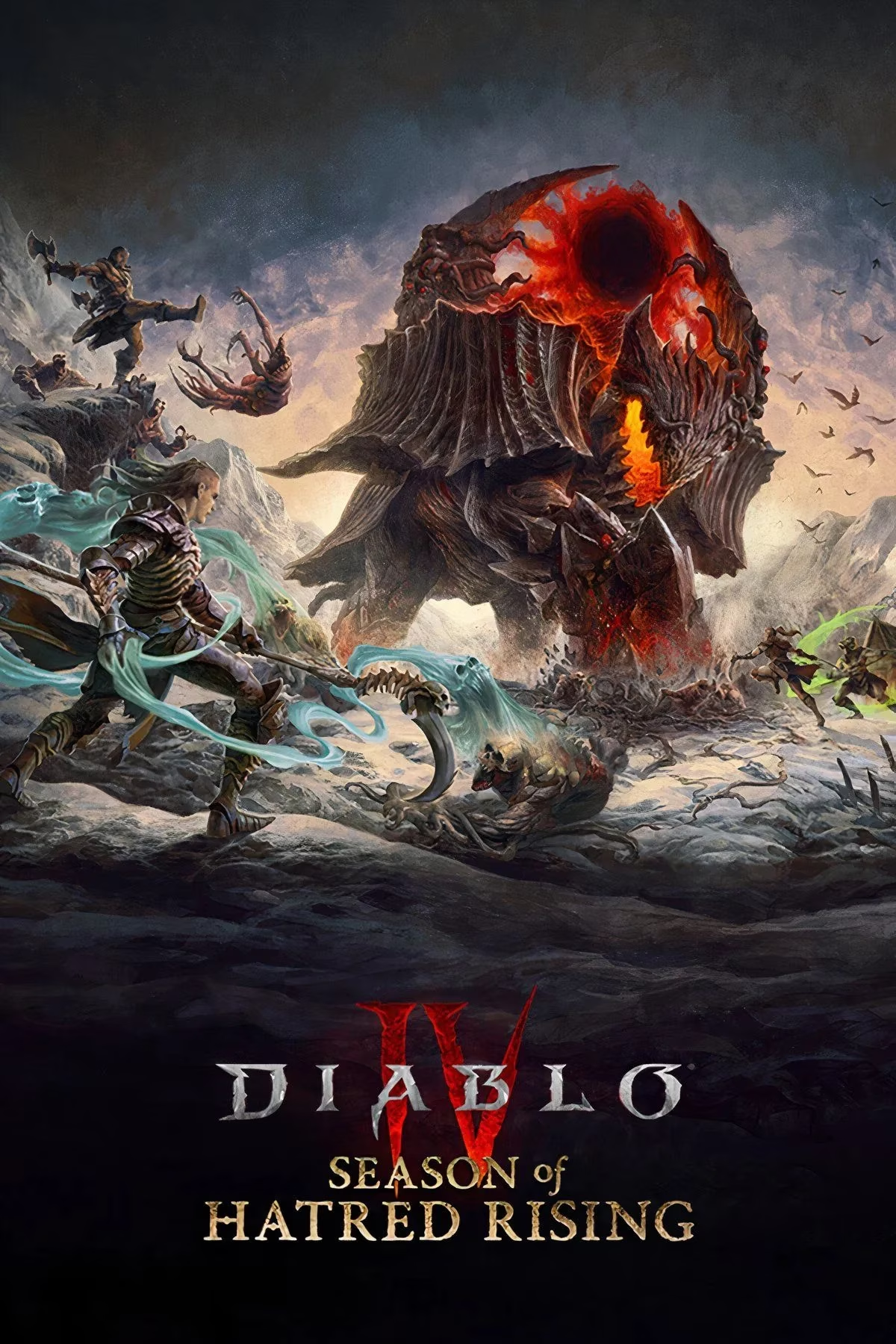
Seasonal rhythms continued to pulse through Sanctuary with the launch of Season of Hatred Rising. Accessible to all players regardless of expansion ownership, this season introduced the ominous Realmwalkers—behemoths that would rise from the earth. Vanquishing them tore open portals to the Seething Realms, domains teeming with enemies guarding powerful spoils. While perhaps less narratively intricate than some past seasons, its unique currency, Seething Opals, provided valuable enhancements to loot and experience gains, fueling the endless pursuit of power.
By 2026, the legacy of Vessel of Hatred was clear. It had enriched Diablo 4 in lasting ways:
-
A Narrative Bridge: It directly continued the main story, providing closure on Neyrelle's journey while hinting at futures yet unknown.
-
Systemic Foundation: Party Finder, favorite waypoints, and Runewords became staple features of the live service.
-
Endgame Evolution: The Undercity and Dark Citadel added layers of repeatable, challenging content for seasoned wanderers.
-
Aesthetic & Mechanical Diversity: The Spiritborn class and the Nahantu region expanded the game's tonal and gameplay palette.
The expansion stood as a testament to Sanctuary's enduring appeal—a world where every update, large or small, could be a new verse in an eternal epic. From the frantic silence of a timed dungeon run to the serene selection of a favorite homecoming point, Vessel of Hatred proved that in the war between light and dark, the quality of the journey itself was the greatest victory for the wanderer.
Data referenced from HowLongToBeat helps frame how Diablo 4: Vessel of Hatred balances a substantial story continuation in Nahantu with repeatable endgame layers like the Kurast Undercity’s timed runs and the coordination-heavy Dark Citadel, clarifying why players often treat the campaign as a gateway while spending the bulk of their long-term hours optimizing Spiritborn builds, Runewords, and seasonal loops such as Realmwalkers and Seething Realms.