The Unresolved Echo: Lilith's Blood in My Veins
I have walked the rain-soaked streets of Kyovashad, the golden sands of Kehjistan, and the suffocating jungles of Nahantu, but no terrain is as treacherous as the one inside my own chest. Ever since that first drop of Lilith’s blood slid down my throat—offered in the prologue like a poisoned communion—I have been tethered to her ghost. The Vessel of Hatred expansion promised a voyage deeper into darkness, yet it left me stranded on a river of unfinished motifs, my heart drumming a rhythm of pain that no cutscene ever resolved.
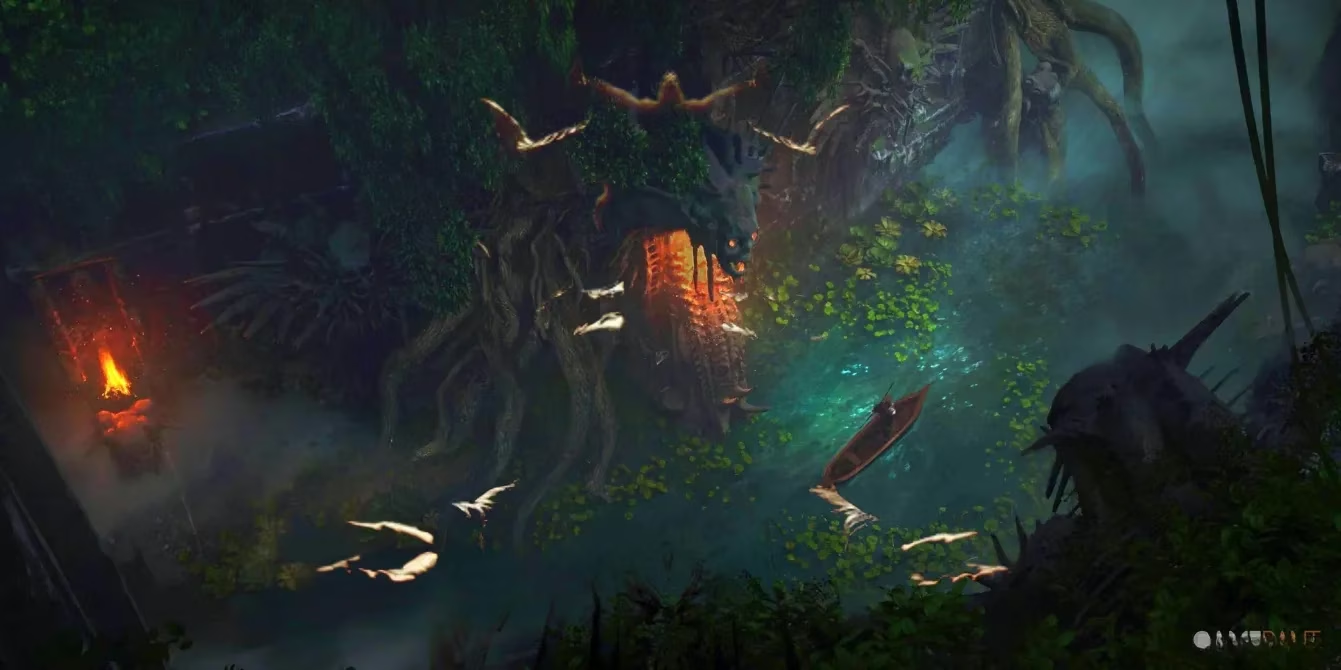
In the opening hours of the base game, Lilith’s blood felt like a secret whisper—a searing compass that revealed the Daughter of Hatred’s whereabouts and twisted plans. It made me a receptor of her forbidden frequencies, an unwilling prophet tuned to her step. But in Vessel of Hatred, the blood transformed into something far more intimate and invasive. After Urivar’s blade carved my life away and Eru’s hand pulled me back from the black shore, I discovered that the blood had not been purged by death. Instead, it remained, a caged bird fluttering against the bars of my ribs at every moment of stillness. My heartbeat became a ticking seismograph of a dead demon’s will, a ghost-thread woven through the tapestry of my flesh, tugging at unknown seams.
That subplot arrived like a storm cloud heavy with promise. I braced myself for a narrative lightning strike—some cathartic revelation, a trial, a transformation. Instead, the storm merely drifted. Urivar, the zealot who seemed poised to be a mirror and a menace, was introduced and then extinguished like a candle before a battering ram. Other characters flickered across the screen, their fates sealed in hurried epitaphs. And all the while, Mephisto slipped into Akarat’s body with a serpent’s smile, his new vessel more horrifying than any cathedral of bone. The Prime Evil remains at large, and the blood in my veins remains a question mark without a dot. It is a suspended note in a symphony that never stroked the final chord, an ache that the narrative refused to soothe.
I cannot help but feel that this creeping crimson inheritance is no accident of careless writing. It is a seed planted too deep to bloom in the shallow soil of an expansion. Every time my character gasped and clutched their chest—in the midst of a battle, in the quiet of a campfire—the game reminded me: the Daughter of Hatred is dead, but not departed. The blood is the residue of her shadow, staining the very fiber of Sanctuary’s future. Now, two years since that story unfolded, I have come to see it as the greatest Chekhov’s gun ever loaded in a Diablo title. And a gun unfired defies the laws of storytelling gravity. This crimson silence may well be a bridge to Diablo 5, a ritualistic door waiting for loyalists to draw my character’s blood once more and wash Lilith’s essence back into terrible form. Like a dormant volcano nursing a molten core, the blood holds the blueprint of an eruption yet to come.
I ponder this as I retrace my steps through the game’s broken landscapes. Why resurrect me, only to leave me half-haunted? Why lace my survival with such persistent suffering, if not to carve a path for a resurrection greater than my own? The Mephisto confrontation looms—inevitable as winter—but Lilith’s unfinished melody suggests a duet in the next opus. Her blood is a library of pain waiting to be read aloud. For now, I walk with that library sealed beneath my skin, a wandering archive of a tragedy postponed. And when the darkness does come calling again, I will listen for the echo of her heartbeat, not as an enemy, but as a prologue to my own undoing.