Tick-Tock in the Underworld: Diablo 4's Kurast Undercity Rush
If a cat chasing a laser pointer suddenly found itself inside a collapsing Aztec temple while juggling ticking alarm clocks, it might begin to understand the frantic heartbeat of Kurast Undercity. This multilayered dungeon sprint is the centerpiece adrenaline factory of Diablo 4's Vessel of Hatred expansion, and it treats patience like a vampire treats garlic. Adventurers descend into the swallowed ruins of old Kurast not to sightsee, but to defy a merciless countdown that hangs over every step like a guillotine blade glinting in torchlight.
Unlocked roughly halfway through the Vessel of Hatred campaign after the quest “Reunion,” and requiring two introductory errands — “The Kurast Undercity” and “Undercity: Wail of the Forgotten” — the activity becomes a permanent fixture once cleared. From that moment onward, the portal sits there humming with barely contained menace, inviting players to test just how fast they can slaughter, loot, and sprint before the timer reduces them to a puff of disappointment.
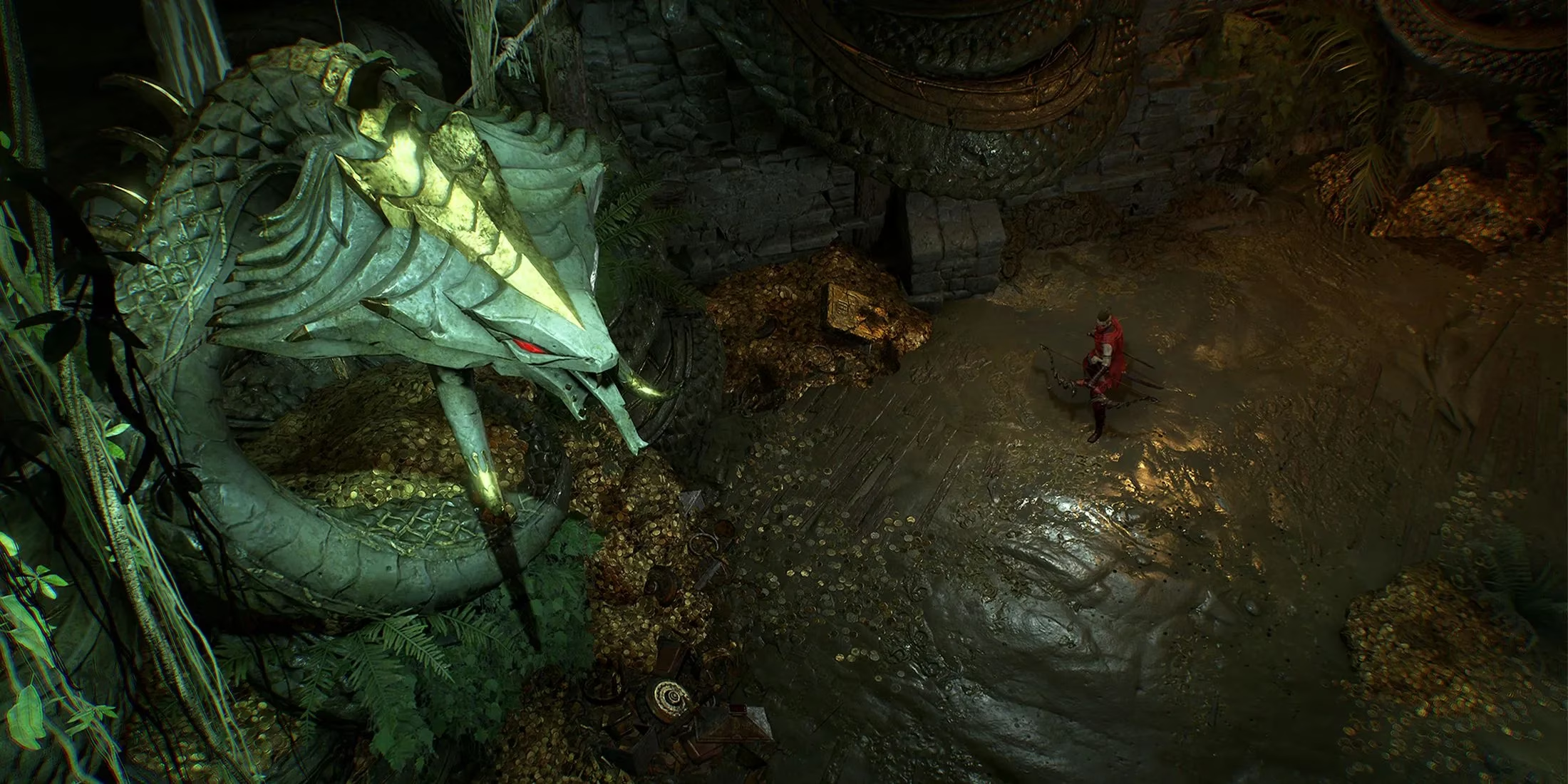
The dungeon’s lifeblood is a relentless clock. When it runs dry, the run ends — poof, no boss, no treasure, only the bitter taste of a wasted Tribute. Yet the instant the District Boss chamber is reached, the timer vanishes like a bad dream, allowing players to breathe and fight at their own pace. That mercy is what makes the preceding sprint so deliciously tense: the whole affair is a time-management heist where every decision is measured in heartbeats.
To keep the pendulum swinging in their favor, adventurers must hunt down Afflicted Monsters and smash Afflicted Structures. These are marked on the map with an orange hourglass icon, glowing like neon signs above a bakery — impossible to ignore once you know the scent of free seconds. The time bonuses range from a measly 1 second for a Minor Afflicted to a generous 30 seconds for a Greater Afflicted or Mini-Boss Afflicted. Named Lesser Afflicted chime in at 14 seconds, while Afflicted Objects deliver a clean 15. Veteran runners treat these bonuses like a gambler treats loose chips: every crumb matters when the house is about to close the table.
Running parallel to the timer chase is the Attunement system, a mechanic that feels like whispering sweet nothings to the spirits of the dead in exchange for shinier rewards. Defeating monsters and igniting Spirit Beacons — those blue-flame icons that dot the map like ghostly breadcrumbs — fills an invisible Attunement meter. Higher Attunement Ranks at the finish line translate directly into better loot. Spirit Beacons spawn waves of enemies that, once defeated, grant a buff pumping movement speed and slashing cooldowns, turning the player into a caffeinated blur of destruction. Grand Spirit Beacons amplify the effect even further, making them the golden ticket for anyone hoping to grab every last reward point before the boss door appears.
Once the timer is beaten and the boss chamber sealed, the real dance begins. Three District Bosses await: Alia, Kurast’s End, ruler of the Ziggurat District; Yoche, The Golden, who presides over the Temple District like a gilded nightmare; and Longtooth, The Wretched, skulking in the Caves District. Each is a biomechanical exam that tests not just gear but muscle memory learned over repeated runs. There is no clock here — only grit. The real pressure is what players brought with them to the party.
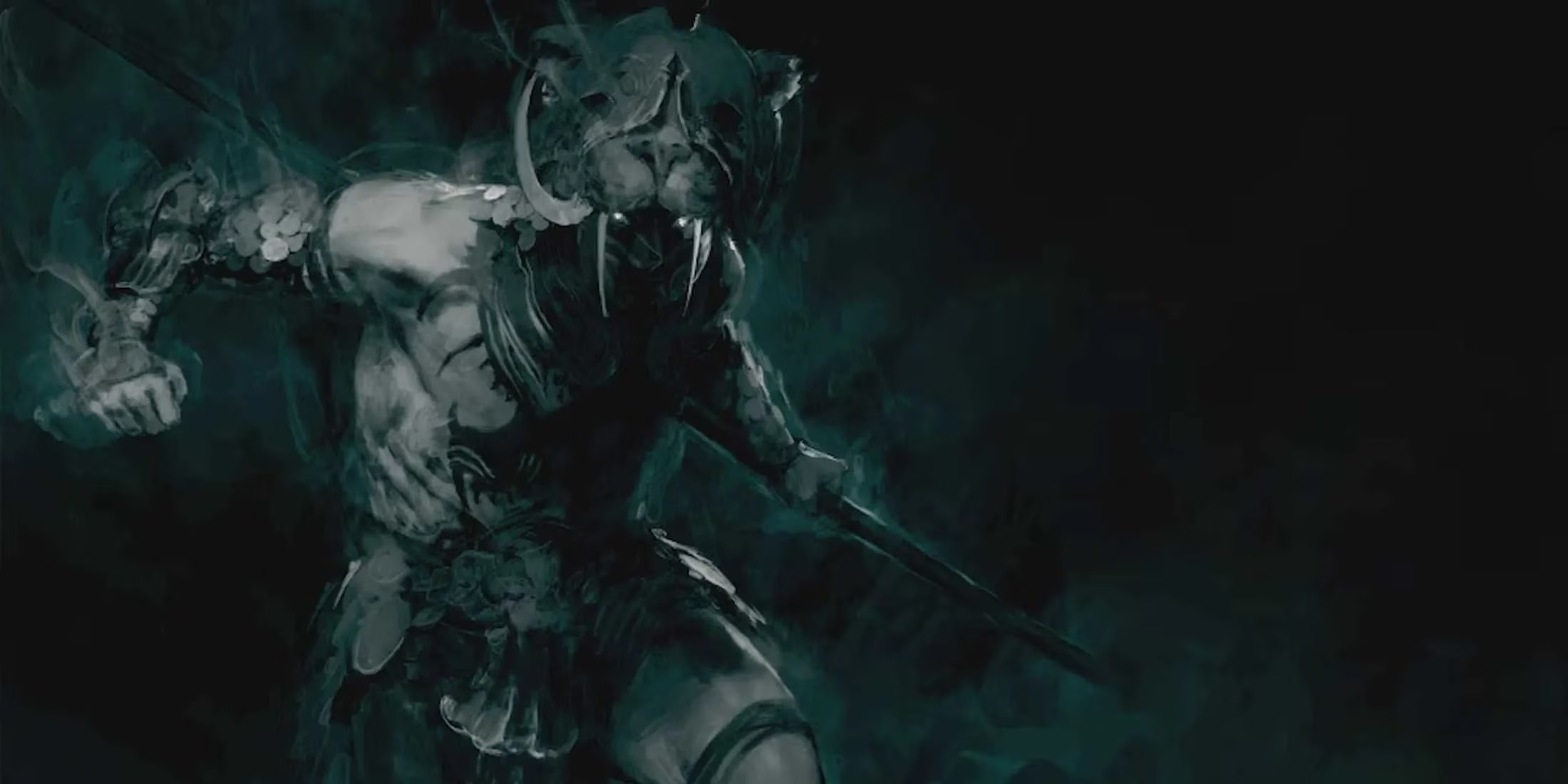
Enter the Tributes and Bargains system, the alchemical kitchen where ordinary runs are seasoned into five-star feasts. Before stepping through the portal, players interact with the Spirit Brazier nearby. This is not a simple click. It’s a negotiation with fate. Tributes, earned from activities across Sanctuary — Nightmare Dungeons, Whisper Bounties, and more — act as run modifiers that raise the difficulty while simultaneously promising specific guaranteed rewards if the run is completed within the Tribute’s conditions. Imagine a chef who demands you juggle flaming knives while preparing the meal, but promises a Michelin star in return. That’s a Tribute.
Bargains, on the other hand, are direct payments: crafting materials, gold, or Obols funneled into the Brazier to influence what spills out of the final chest. Want items with a specific affix? There’s a Bargain for that. Want more legendary drops? Pay up. The whole setup transforms the Undercity from a chaotic loot piñata into a finely tunable rewards machine, provided players do their homework and stockpile the right bargaining chips.
For those with enough nerve, the optimal strategy is a gear-checking scavenger hunt: gather Tributes with the most desirable reward types, hoard Bargains to shape affixes, then descend with a build that can vaporize Afflicted Monsters in the split second they appear. Some players develop a sixth sense for the orange hourglass icons, their eyes scanning the minimap with the twitchy precision of a bird spotting insects. The synergy between killing quickly and moving faster compounds into a loop that makes the dungeon feel less like a grind and more like a speedrunning sport.
Kurast Undercity is, at its core, a game of deliberate panic. It dangles magnificent treasures above a pit of wasted time, then hands players a match and asks them to run. Those who master its rhythm — knowing when to divert for a Greater Afflicted, when to ignore a Spirit Beacon because the Attunement bar is already fat, when to cash in Bargains for a targeted drop — will find it to be one of the most rewarding pastimes Vessel of Hatred has to offer. Everyone else will just leave a lot of ghostly footprints and empty hourglasses behind. In the Undercity, the clock doesn’t care about feelings. It only cares about speed, and whether you brought enough Bargains to make the sacrifice worthwhile.